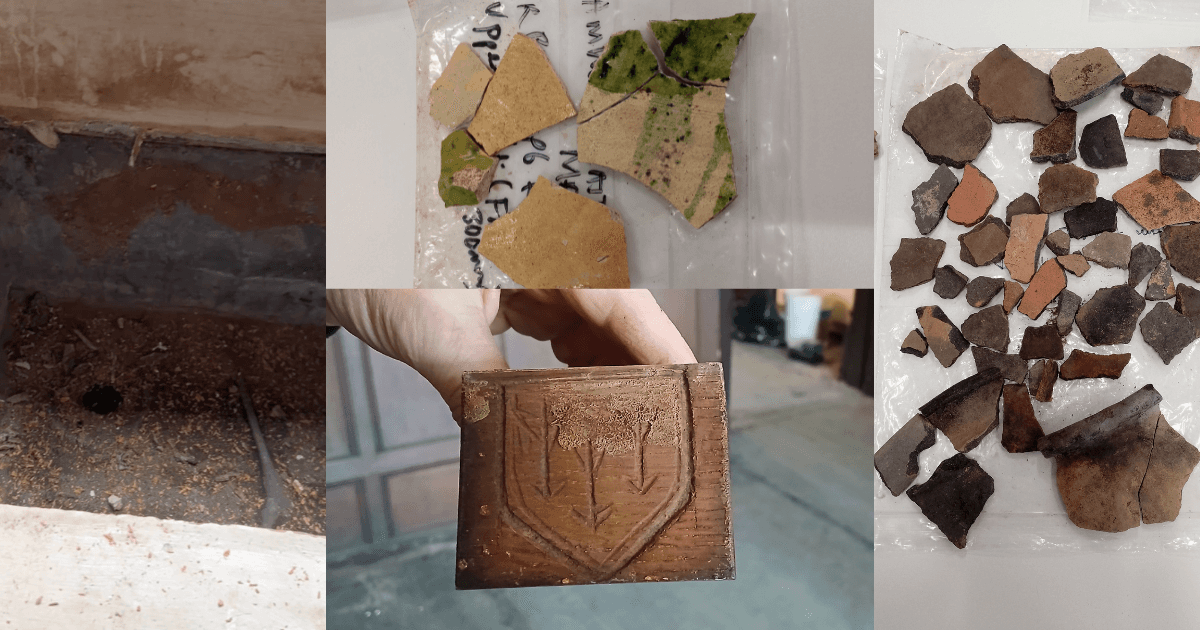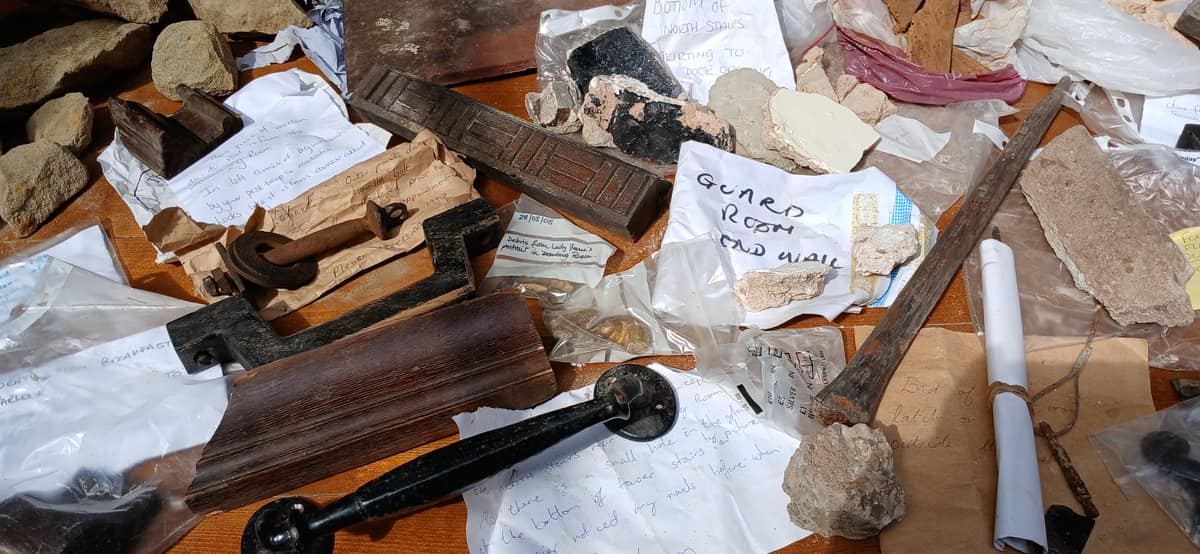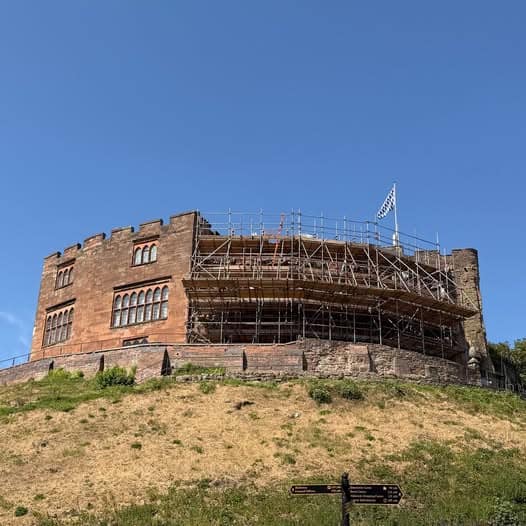
Medieval pottery, animal bones, a historic lead-lined sink and a mysterious carved symbol have been uncovered during the £1.9 million restoration of Tamworth Castle.
Specialist contractors and archaeologists made the discoveries while working in areas of the landmark that had been hidden or inaccessible for generations. Tamworth Borough Council says each find is helping researchers understand how the castle was built, adapted and used during its long history.
The conservation programme is supported by £1,716,238 from Arts Council England's Museum Estate and Development Fund, alongside £190,695 from the borough council. It follows the start of the latest phase of restoration work announced in August.

Medieval pottery and animal bones uncovered
One of the most significant groups of finds came from work to repair and replace the drainage system beneath the modern kitchen area.
Trial pits were excavated under the supervision of University of Huddersfield archaeologist Will Mitchell before a route was created for the new pipes. Layers of soil were examined and recorded to protect anything of archaeological interest.

The work uncovered ceramic fragments and animal bones in an area west of the Great Hall that is believed to have contained a medieval kitchen.
Some of the pottery is thought to date from the 13th to the 15th centuries. The collection includes green-glazed fragments and later medieval reduced wares, probably from cooking pots and rounded jugs. Council information suggests some pieces may have come from Midlands kilns, including the medieval pottery centre at Chilvers Coton in Warwickshire.

Bones from cattle, sheep and game birds were also recovered, with a number showing visible butchery marks. The remains could provide new evidence about food eaten by the castle's wealthier residents.
A sheep toe bone with a drilled hole is among the more unusual objects. Archaeologists believe it may have been reused as a toggle. Selected pottery and bone fragments will now be examined by specialists.
Lead-lined sink preserved beneath gift shop
Contractors from Messenger BCR found an intact lead-lined sink inside a deep windowsill in the Townshend Room, which is used as the castle gift shop.
The sink had been hidden behind a compressed-straw building board of a type widely used from the 1950s. It is believed to date from the 18th or 19th century and may indicate that the room once served as a pantry or another domestic service area.
The lead appears to have been beaten into a wooden frame using a technique known as bossing, before individual drainage holes were punched through it. Lead lining helped protect wooden sinks from water and decay.
The feature will be protected and covered again when the room is reinstated, leaving it preserved beneath the windowsill.
Mysterious three-arrow carving found in Oak Room
A separate discovery was made after part of the Oak Room's decorative panelling was removed so repairs could be carried out on the masonry behind it.
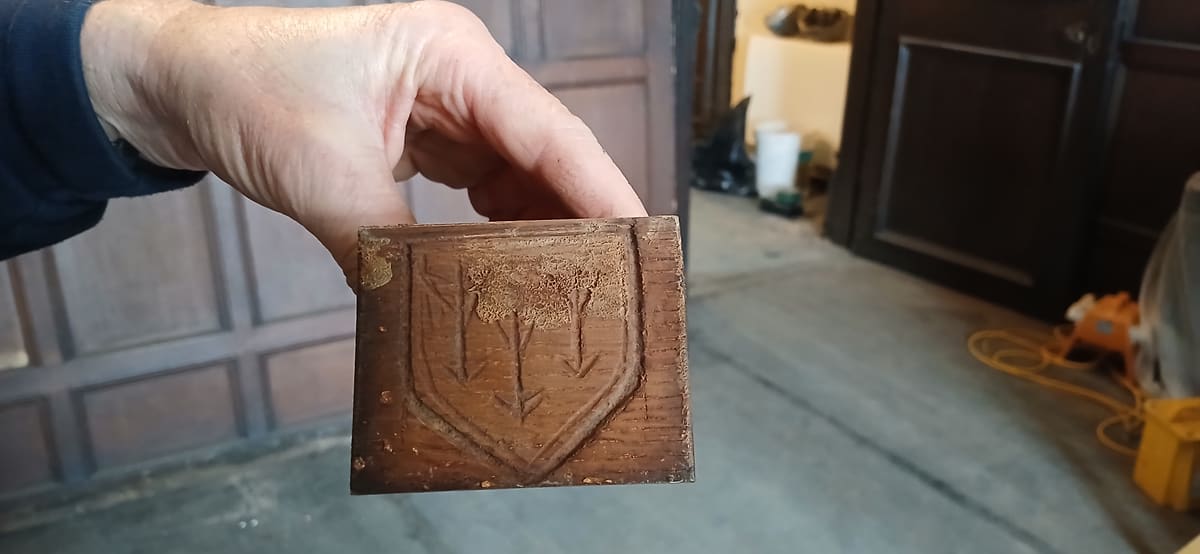
Workers found three arrows within a shield shape carved into the upper surface of a cornice bracket. Because the mark was concealed when the panelling was in place, it was not intended to form part of the room's visible decoration.
Its meaning has not yet been established. Possibilities include a carpenter's or joiner's mark, a guide showing where the piece belonged during assembly, or a heraldic symbol.
The panelling is likely to have been installed during renovations carried out by George Ferrers Townshend towards the end of the 18th century. However, fittings were also brought to the castle from other buildings, making individual pieces difficult to date.
Each removed panel has been numbered and stored for reinstatement after the masonry work. Castle staff would like to hear from anyone who can help identify the three-arrow symbol.
Castle remains open during restoration
Councillor Lewis Smith, Tamworth Borough Council's portfolio holder for people services, engagement, leisure and heritage, said the work was giving the team a deeper understanding of the building.
"Tamworth Castle has been cared for and adapted by generations of people for almost 1,000 years, and many of them have left their mark. As the restoration work progresses, we're uncovering more evidence of that history and gaining a much deeper insight into that past than we've had before.
"It's one of the most exciting aspects of this project to protect and preserve the castle for the next 1,000 years."
Tamworth Castle remains open to visitors while the restoration continues, although access to individual rooms and parts of the walkway may change during the project.
Further information and updates are available through the Tamworth Castle restoration pages.