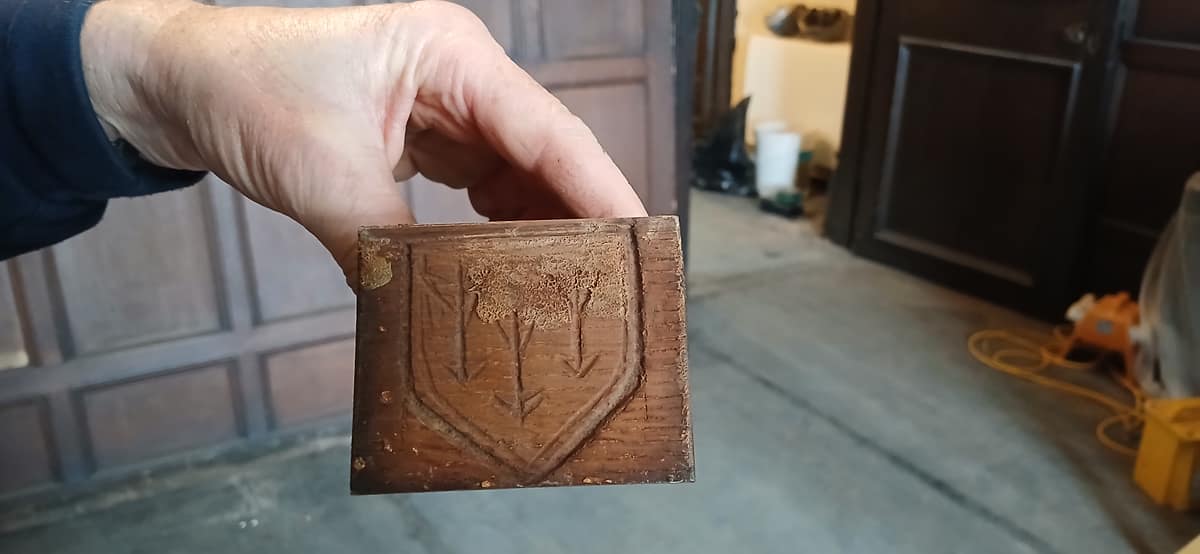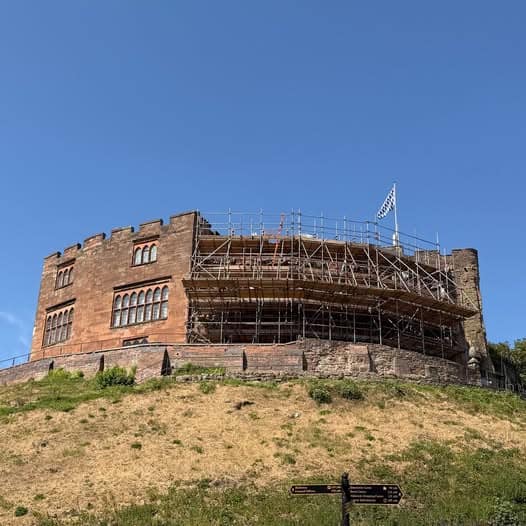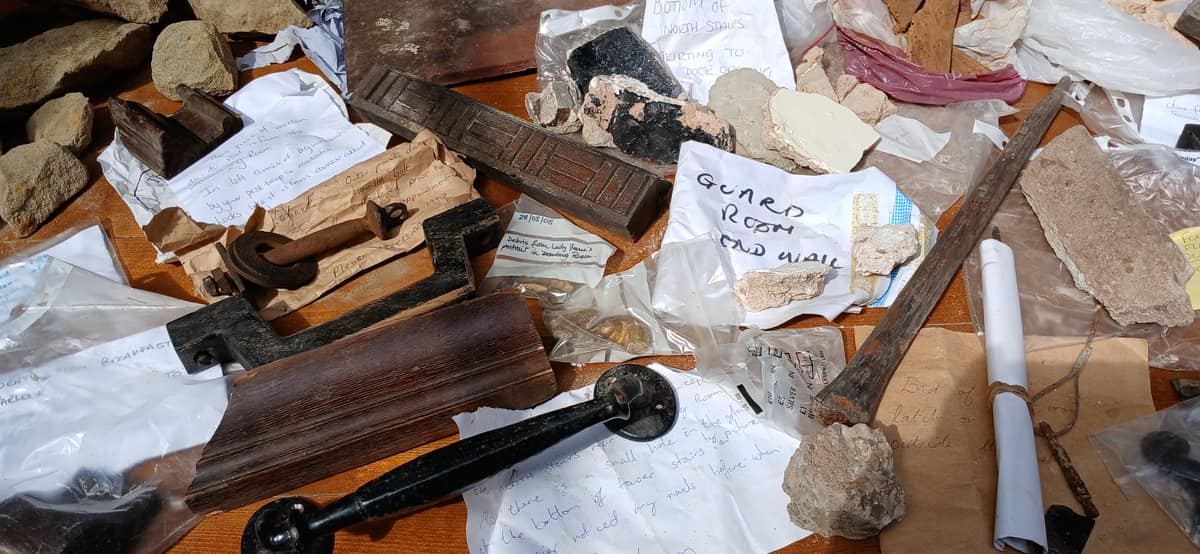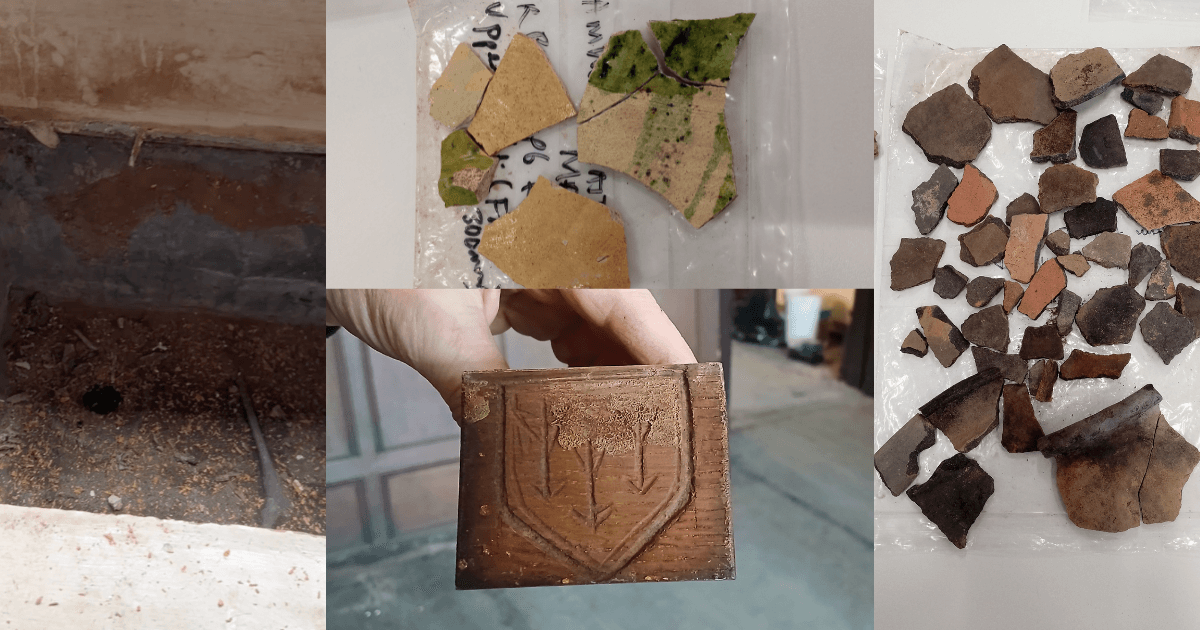
A £1.9m restoration project at Tamworth Castle has uncovered medieval pottery, animal bones, and other artefacts that shed light on the castle's 1000-year history. The discoveries include centuries-old ceramics, butchered animal remains, a hand-crafted lead-lined sink, and a mysterious carved object.
The restoration is funded by £1,716,238 from Arts Council England's Museum Estate and Development Fund (MEND), and £190,695 from Tamworth Borough Council. Work is being carried out by specialist contractors as part of ongoing efforts to preserve the castle and its exhibits.
Medieval pottery and bones reveal diet of castle residents
The most significant discovery emerged during repairs to the drainage system beneath the modern kitchen area. Archaeologist Will Mitchell from the University of Huddersfield supervised trial pits dug into the soil, carefully examining each layer for archaeological finds.
This work uncovered ceramic pieces and animal bone fragments, concentrated in an area west of the Great Hall believed to be the site of a medieval kitchen. The ceramics date from between the 13th and 15th centuries and include fragments of green-glazed pottery and later medieval reduced wares, likely from cooking pots and rounded jugs. Some pieces may have been produced at Chilvers Coton in Warwickshire, an important medieval pottery centre.
Animal bones from cattle, sheep, and game birds were also found, many bearing butchery marks. A sheep phalange (toe bone) with a hole drilled through it suggests it may have been reused as a toggle. The most notable finds will be sent to medieval pottery and animal-bone specialists for further analysis.
Lead sink hidden for decades in gift shop
Contractors from Messenger BCR discovered an intact lead-lined sink inside a deep windowsill in the Townshend Room gift shop. The sink had been concealed by Stramit board, a rigid panel of compressed straw widely used in buildings from the 1950s onwards. The sink is believed to date from the 18th or 19th century and provides evidence of how this part of the castle was once used.